We study how social media usage patterns affect adolescent mental health and translate that research into free assessments, tracking tools, and educational programs built on a 79-source scoping review.
Our research position
The peer-reviewed literature more consistently associates passive, comparison driven social media use with negative mental health outcomes than total screen time. Pre-existing vulnerability moderates who is most affected. Most current interventions focus on time limits, which do not address either of these variables. Our scoping review of 79 sources, registered on the Open Science Framework, synthesizes this evidence across five outcome domains.
Key findings from the literature
Below are four key findings from our 79-source literature review, which spans longitudinal studies, systematic reviews, and national health advisories published between 2000 and 2024.
0.35%
Variance in wellbeing explained by digital technology use
Across 355,358 adolescents drawn from three datasets, digital technology use accounted for just 0.35% of variance in wellbeing. Researchers likened the effect size to eating potatoes. Screen time alone is a limited predictor of harm.
Orben & Przybylski, 2019 · Nature Human Behaviour · n=355,358
Bidirectional
The relationship between social media and mood
Adolescents experiencing lower mood tend to increase social media use, and heavier use can in turn deepen those struggles. This bidirectionality makes causal conclusions difficult to draw, and points toward pre-existing vulnerability as a more important variable than usage alone.
Boers et al., 2019 · Coyne et al. 8-yr longitudinal, 2020
Pattern
How you use it may matter more than how long
Passive Facebook use was associated with lower wellbeing; active use showed no significant association, even controlling for time. This study was conducted with young adults, not adolescents. Whether the same pattern holds across adolescent populations is an active area of research.
An umbrella review synthesizing 25 prior reviews found no evidence of universal harm. Outcomes appear to depend on prior mental health, personality, family dynamics, and in-person connection. Broad, one size fits all interventions do not reach those most affected.
Research suggests that two people with similar screen time can have meaningfully different experiences based on what they are doing during that time. The primary study supporting this distinction (Verduyn et al., 2015) was conducted with young adults. Whether the same pattern holds consistently across adolescent populations is still being studied.
Passive Use (Higher Risk)
Scrolling without interacting
Watching others' curated highlights
Absorbing feeds silently
Seeking validation through likes
Doomscrolling during low mood
Constant upward social comparison
vs.
Active Use (Lower Risk)
Direct messaging friends
Commenting and participating
Sharing personal content
Collaborating or creating
Using platforms for real connection
Purposeful, goal-directed use
Free tools and assessments
All tools are free, require no account, and store no personal data. Assessment scoring runs in your browser. Nothing is sent to our servers.
"The contents are well written. I tried one of the assessments, and it was really awesome. Overall, it is an impressive website. I think it is very resourceful and informative. I believe it will make a difference out there."
~Araya
Programs
MindScroll Health runs research education programs and is developing programs for adolescents, educators, and school counselors. In summer 2026, we led the Psychology and Cognitive Science track for the SISTER program. Selected from over 1,000 applicants nationally the Track had a ~10% acceptance rate with cohorts consisting of highschool, college, and medical school students.
For Adolescents
Understanding your own patterns, what the research says, and practical tools for building understanding around passive use.
For Educators & Counselors
How to identify at-risk students based on pattern, not just screen time, and how to use MindScroll tools in a school or counseling context.
For Caregivers
What the evidence says about your teen's social media use, and what kinds of involvement the research identifies as protective.
Get Started
Understand your usage pattern.
All assessments, trackers, and resources are free and store no personal data.
Three assessments, all free and fully embedded. No Google Forms, no email required, no data stored anywhere. Your answers are scored right in your browser and your results show up instantly on screen.
Nothing leaves your browser. Complete privacy
Assessment 01 · 13 questions
Passive vs. Active Use
Are you scrolling more than you are connecting? This assessment identifies whether your usage patterns lean passive or active, and maps that against what the research says about each. Two people can spend the same amount of time on social media and have completely different experiences based on what they are doing.
A broader look at how social media may be affecting your day-to-day life. This one covers four domains (sleep, social comparison, compulsive use, and academic/emotional impact) and gives you a breakdown of which area is most relevant to you along with context from the literature.
How do you feel after you put your phone down? This check-in has two short parts: one before you open social media and one after you are done. It tracks mood shifts and emotional patterns in the moments after use, which is one of the least measured dimensions in the existing research.
Mood before vs. afterEmotional residueSession patterns
The General Assessment covers four areas that the research consistently identifies as the most meaningful pathways between social media use and adolescent wellbeing.
Sleep Disruption
Social media before bed has been associated with slowing of melatonin release and keeping cognitive arousal elevated. Sleep disruption is the most consistent pathway through which social media causes harm, independent of content.
Compulsive & Heavy Use
Variable ratio reinforcement, the same mechanism that makes gambling compelling, is engineered into social media platforms. Adolescent brains are particularly susceptible to this design.
Social Comparison
Platforms like Instagram create environments saturated with upward comparison. Passive use maximizes exposure to curated content without the social rewards that would offset it.
Academic & Emotional Impact
Research links heavy social media use to difficulty concentrating, fatigue, and mood disruption. These pathways flow through sleep and comparison rather than the platform itself.
Important: MindScroll Health assessments are psychoeducational tools grounded in peer-reviewed research. They are not clinical assessments, diagnoses, or substitutes for professional mental health care. If you are experiencing significant distress, please reach out to a licensed mental health professional or call/text 988 (US).
Literature review
This is a summary of the peer-reviewed literature underpinning everything MindScroll Health does. Studies span 2000–2025 and include longitudinal analyses, systematic reviews, large-scale surveys, and national health advisories.
The conversation around social media and adolescent mental health is usually framed around one variable: screen time. Reduce it, the argument goes, and outcomes improve. But when you read the research carefully, that framing does not fully hold.
A large-scale analysis of over 355,000 adolescents found that digital technology use accounted for just 0.35% of variance in wellbeing, an effect so small researchers compared it to eating potatoes. An eight-year longitudinal study found no consistent long-term link between social media use and mental health. These findings do not mean social media is harmless. They indicate that screen time alone is the wrong variable to target.
What the evidence shows instead: passive use (scrolling without interacting, absorbing curated content without contributing) is more strongly associated with negative outcomes than duration alone. The primary study supporting this distinction was conducted with young adults rather than adolescents specifically. Replication across adolescent populations remains an important research gap. Alongside usage patterns, pre-existing vulnerability (prior mood struggles, comparison sensitivity, social anxiety) consistently emerges as a moderating factor across studies. The adolescents showing the most significant associations are not necessarily the heaviest users, but those with existing risk factors engaging in specific usage patterns. MindScroll's tools are built around these two variables.
Author(s) & Year
Design
Sample
Key Finding & Relevance
Twenge et al. 2018
Large-scale trend analysis
506,820 Grades 8–12
Heavier social media use associated with depressive symptoms and suicide-related outcomes across a nationally representative sample. mood disruption
Orben & Przybylski 2019
Large-scale data analysis (3 datasets)
355,358
Digital technology use accounted for just 0.35% of variance in adolescent wellbeing. Establishes social media as one factor among many, and a small one on average. effect size
Coyne et al. 2020
8-year longitudinal
500+
No consistent long-term link found between social media and mental health outcomes. Supports bidirectionality and cautions against assuming causation. bidirectionality
Boers et al. 2019
Longitudinal
3,826
Increased social media use associated with depressive symptoms, persisting across time points. Corroborates Twenge using a different population. depression
Keles, McCrae & Grealish 2020
Systematic review
13 studies
Social media linked to depression, anxiety, and psychological distress. Provides a synthesis strengthening the mood disruption argument. depression · anxiety
Valkenburg, Meier & Beyens 2022
Umbrella review
25 reviews
No universal harm established. Impacts are individualized. Outcomes depend on prior mental health, personality, and social context. individual differences
Verduyn et al. 2015
Experimental & longitudinal
84 + 82
Passive Facebook use predicted poorer wellbeing; active use showed no significant association. Primary source for the passive vs. active distinction. Note: focused on adults. passive use · core finding
Marchant et al. 2017
Systematic review
13 studies
Modest links between intense social media use and suicidal ideation, but causation could not be established. Associations concentrated among those already at risk. suicidal ideation
Scott et al. 2019
Cross-sectional
11,872
Social media use before sleep is associated with compromised sleep quality. Timing and type of engagement, not duration, drives the effect. sleep disruption
Kowalski et al. 2014
Meta-analysis
196,000+ 131 studies
Cyberbullying consistently linked with depression, anxiety, and low self-esteem across a very large sample. Strengthens the self-esteem and cyberbullying section. cyberbullying · self-esteem
Odgers & Jensen 2020
Narrative review
Multiple large-scale
Most rigorous studies show only small associations. Socioeconomic factors and pre-existing disadvantage significantly moderate outcomes. critical perspective
The Full Literature Review
A 79-source peer-reviewed scoping review examining depression and anxiety, self-esteem and body image, suicidal ideation, sleep disruption, and cyberbullying across studies from 2000–2025. Registered on the Open Science Framework and following PRISMA-ScR reporting guidelines. Currently being prepared for journal submission.
Why MindScroll Health exists
MindScroll Health began as a literature review examining the relationship between social media and adolescent mental health. The review identified a consistent pattern across the research: passive, comparison-driven use and pre existing vulnerability are suggested to be more predictive of negative outcomes than total screen time. Current policy interventions, primarily time-limit approaches, do not target these variables. MindScroll Health was built to address that gap with accessible, research grounded tools.
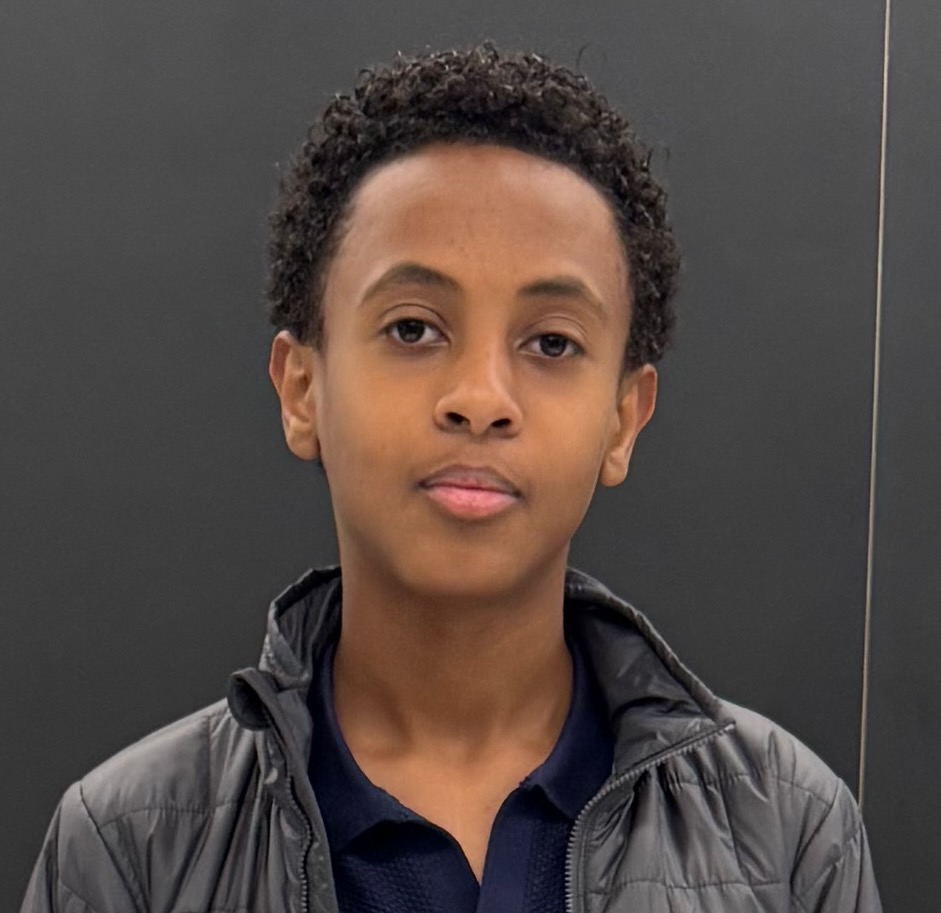
David Abebe
Founder
David built MindScroll Health after a research project in 8th grade studying the effects of social media and mental health. His interest led him in conducting an independent 79 source scoping review on social media and adolescent mental health. The review is registered on the Open Science Framework and is being prepared for journal submission. In summer 2026, he designed and led the Psychology and Cognitive Science track for the SISTER program, teaching research methods to a selective cohort selected from over 1,000 national applicants across 8 sessions. He is currently running a longitudinal pilot study and coordinating outreach for MindScroll Health.
MindScroll Health partners with educational programs, researchers, and organizations working on adolescent wellbeing and digital behavior. If you are a faculty researcher, school counselor, or program director interested in collaborating, reach out.
SISTER Program
In summer 2026, MindScroll led the Psychology and Cognitive Science track for the Summer Institute of Science, Technology, and Engineering Research. 1,000+ applicants. 8 sessions covering research methods, data analysis, and scientific writing. Student projects submitted for peer-reviewed publication and conferences.
For researchers and faculty
We are seeking faculty mentorship for our scoping review submission and longitudinal study design. If your work and expertise focuses on adolescent social media use, passive vs. active engagement, or digital wellbeing interventions, we would value a conversation.
Everything we build starts with the literature. If we cannot point to peer reviewed evidence, we do not say it. The assessments, the feedback, the explainer documents: all of it traces back to specific studies, specific findings, specific authors.
Honest About Limits
We're a psychoeducational organization, not a clinical one. We're explicit about what our tools can and cannot do. The research is complex and contested in places, and we say that. We do not overstate what we know.
Personalized, Not Generic
The research is clear that outcomes depend on who you are, not only about what you do online. Everything MindScroll Health produces is tailored to the individual's specific pattern, not population averages or one size fits all rules.
Roadmap
MindScroll Health is a young organization. What exists now (the literature review, the assessments, the tracker) is the foundation. Here is what comes next.
Complete
79-source scoping review (OSF registered), three assessments, usage tracker, sleep check-in, study infrastructure, SISTER Psychology track (1,000+ applicants, 8-session curriculum)
In Progress
Literature review submission for publication, post-use effects assessment (Assessment 03), team building
Near Term
Online programs for adolescents and educators, school counselor partnership program, faculty mentor partnership
Long Term
Longitudinal study on passive use patterns and wellbeing outcomes across adolescent populations
Get Involved
Join the team
MindScroll Health is looking for people who care about this problem and want to contribute. We are small and move fast, and every person who joins has a real role with real output.
If you are interested, apply through the link below.
Help with literature sourcing, fact checking, and preparing the review for journal submission. Background in psychology, public health, or related fields helpful.
Faculty / Clinical
Faculty Advisor or Clinical Consultant
We're actively seeking a licensed mental health professional or faculty mentor to provide oversight as we grow toward a longitudinal study. This is a formal role.
Outreach
School & Community Outreach
Help us build relationships with school counselors, youth organizations, and mental health nonprofits. Strong communicators with existing networks welcome.
Design / Tech
Web & Design Contributor
Help improve and expand the MindScroll Health website and tools. Experience with frontend development or UX design.
Contact
Whether you want to partner with us, join the team, request the literature review, or ask a question, reach out. We read and respond to every message.
Send us a message
We read and respond to every message within 2-3 business days.
Yes. Our assessments are free and designed for adolescent and young adult populations. Reach out if you'd like to discuss how to integrate them into a school or counseling context.
Can I request the full literature review?
Yes. Send us an email with a brief note about your context and we'll share what's available. The review is currently being prepared for journal submission.
Is MindScroll a clinical service?
No. MindScroll Health is a psychoeducational organization. Our tools are research grounded educational resources, not clinical assessments or therapy. If you need clinical support, please reach out to a licensed mental health professional.
Is this free?
All of it. The assessments, the tracker, the explainer documents. All free, always. No account required for the assessments.
Programs
MindScroll Health designs and delivers research education programs. Our flagship program is the SISTER Psychology and Cognitive Science track, a 4-week intensive where undergraduate researchers design and execute original studies in behavioral psychology and human-computer interaction.
Programs launching soon. Register your interest below and we'll reach out with dates first.
Who this is for
Audience 01
For Adolescents
Understanding your own patterns and what you can do about them.
This session walks through what the research says about social media and wellbeing. Not the headlines. The studies. Attendees complete the MindScroll Health assessment's during the session and leave with a better understanding of their own usage patterns and concrete building strategies drawn from the literature.
60–75 minutes
Online (Zoom) · Free
Ages 13–22
Audience 02
For Educators & School Counselors
How to use pattern-based tools with students and what the research supports.
Designed for school counselors and educators who want a research grounded framework for identifying at risk students. Covers the passive vs. active use distinction, how to use MindScroll Health assessments in a school context, and what kinds of conversations the evidence suggests are most effective.
90 minutes
Online (Zoom) · Free
Educators, counselors, school staff
Audience 03
For Caregivers & Parents
What the evidence says about your teen, and what helps versus what does not.
Most caregiver guidance focuses on screen time limits. The research suggests that is not the most meaningful variable. This session translates what the literature says about parental involvement, how to have effective conversations about social media use, and which protective factors show up in the studies.
60 minutes
Online (Zoom) · Free
Parents & caregivers of teens
Session format
In summer 2026, MindScroll led the Psychology and Cognitive Science track for the SISTER summer research program. Over 1,000 students applied nationally. The track covered research methods, survey design, data analysis, and scientific writing across 8 sessions, with students designing and executing original research projects submitted for peer reviewed publication and conferences.
Every session is grounded in peer-reviewed research and led by people who have read it, not just summarized it. We also build in time for real questions, the ones that do not fit neatly into a 10-step guide.
01
Research walkthrough
What the studies show, not the headlines. Passive use, vulnerability, bidirectionality, what works.
02
Live assessment
Attendees complete the MindScroll Health assessment during the session and discuss results in a guided format.
03
Targeted strategies
Evidence based strategies matched to each domain. Specific friction building techniques from the literature, not generic tips.
04
Open Q&A
Unscripted time for the questions that matter to the people in the room.
For Schools & Organizations
Partner with us
We're open to partnering with schools, youth organizations, and mental health nonprofits to deliver in person or online sessions to specific groups. Reach out and tell us about your context.
These documents translate the academic literature into accessible reading for adolescents, caregivers, school counselors, and anyone else who wants to understand what the research shows without reading 79 studies. Free to download, share, and use.
Explainer Document
5 min read
Why How You Use Social Media Matters More Than How Long
The plain-language case for why passive use and pre-existing vulnerability are the variables that matter, not only screen time. Covers the 0.35% finding, the passive vs. active distinction, variable ratio reinforcement, and what effective intervention looks like. Written to be readable by a teenager, a parent, or a school counselor.
A one page overview of what MindScroll Health is, our core thesis, what we have built, and where we are going. Designed as a leave behind for partner conversations with school districts, mental health organizations, and clinical advisors. Includes key sources, the four phase roadmap, and what partnership looks like in practice.
Core thesis & argument
What MindScroll has built
Four-phase roadmap
Partnership details
Key research sources
Designed as a printable one pager for partner considerations
Legal & Disclaimer
Full terms
Terms of Use & Disclaimer
MindScroll Health's full disclaimer covering what we are and are not, what our tools can and cannot do, data and privacy practices, limitation of liability, and crisis resources. We're explicit that nothing we provide constitutes medical advice, clinical diagnosis, or professional mental health care. This document is referenced throughout the site.
Nature of MindScroll
Not medical advice
Limitation of liability
Minors & caregivers
Data & privacy
Crisis resources
If you have legal questions about these terms, consult a licensed attorney.
Looking for the full literature review?
The 79 source scoping review is registered on the Open Science Framework and is being prepared for journal submission. To request a copy, send us a message with your context and we'll share what's available.
After Using Our Resources
Did it help?
We want to know. This check in takes 2 minutes and helps us understand what's working and what is not. It also contributes to the data we are building toward a longitudinal study. Anonymous, no personal info required.
If you've used any of the assessments, the tracker, or the explainer documents, share how it went. Honest feedback is more useful to us than positive feedback.